



Minimum Order Quantities for Custom Packaging Explained
When launching a consumer product, one of the first challenges brands encounter is minimum order quantities, often referred to as MOQs.
Many founders ask:
Why do packaging suppliers require minimum order quantities?
Understanding how MOQs work is essential for budgeting, production planning, and supply chain strategy. Packaging manufacturers rely on minimum production volumes to cover setup costs, printing processes, and material sourcing.
This guide explains what packaging MOQs are, why they exist, and how brands can manage them effectively.
What Is a Minimum Order Quantity in Packaging?
A minimum order quantity (MOQ) is the smallest number of packaging units a manufacturer will produce in a single production run.
Packaging production involves setup processes such as:
- Printing plate creation
- Machine configuration
- Material sourcing
- Quality control calibration
Because these steps require time and resources, manufacturers must produce a certain volume to make the production run economically viable.
For brands, this means packaging orders must meet a minimum production threshold.
Typical Minimum Order Quantities for Packaging
MOQs vary depending on packaging type, materials, and printing method.
Typical MOQ ranges include:
| Packaging Type | Typical MOQ |
|---|---|
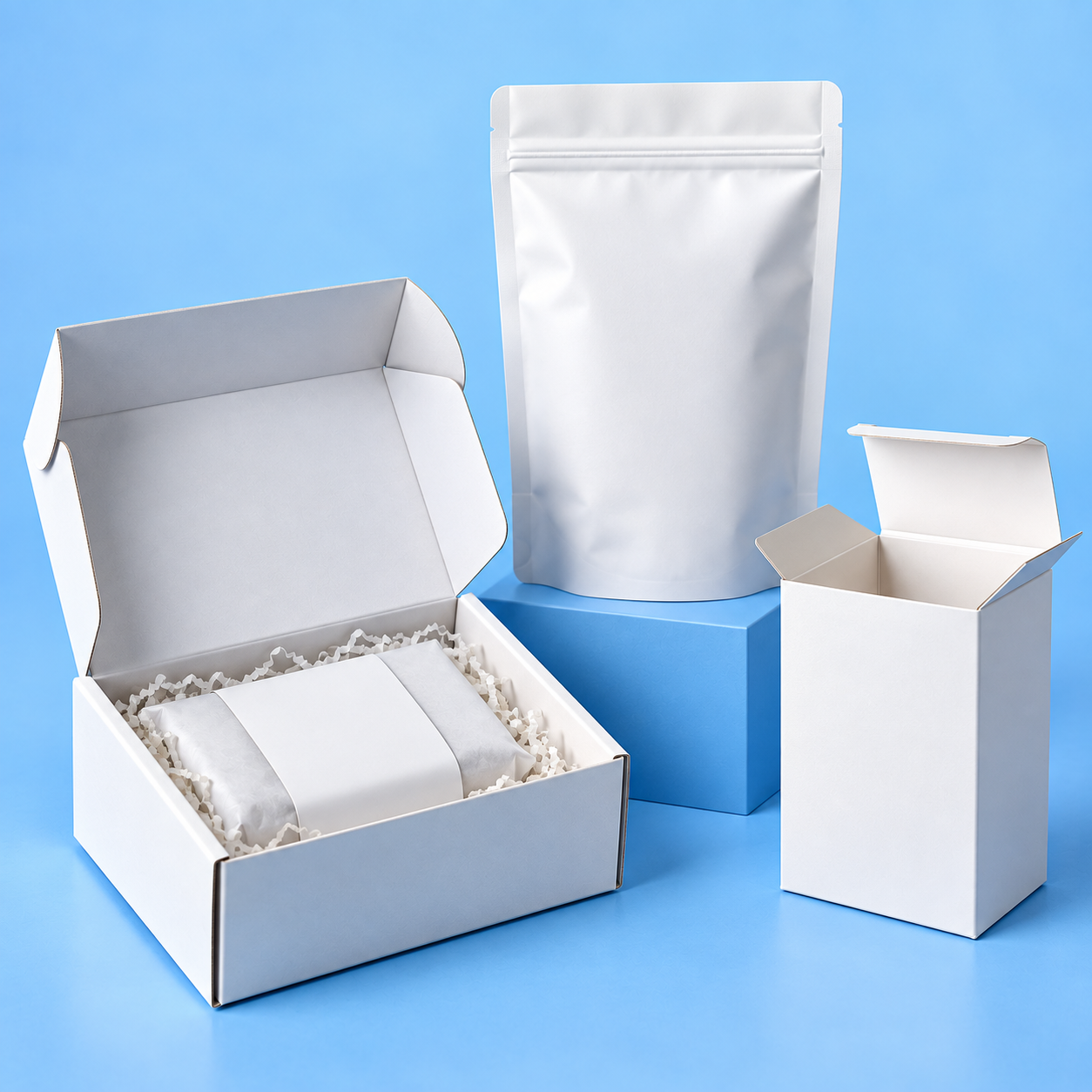
| Flexible packaging (pouches, bags) | 5,000 – 25,000 units |
| Folding cartons | 10,000 – 50,000 units |
| Corrugated packaging | 1,000 – 10,000 units |
| Rigid premium boxes | 2,000 – 10,000 units |
Higher order quantities allow manufacturers to reduce the per-unit cost and operate production equipment more efficiently.
Why Packaging Suppliers Require MOQs
Packaging manufacturers require minimum order quantities for several operational reasons.
Printing Setup Costs
Many packaging formats require printing plates or specialized setup processes.
For example:
- Flexographic printing requires custom printing plates
- Offset printing requires calibration and color matching
- Large printing presses require setup before production begins
These setup costs are fixed regardless of the production size. MOQs allow these costs to be distributed across the production run.
Material Sourcing
Packaging materials are often purchased in bulk rolls or sheets.
Common materials include:
- Laminated barrier films
- Corrugated board sheets
- Specialty coated papers
- Plastic films used for flexible packaging
Manufacturers typically purchase these materials in large quantities, which requires brands to meet minimum production volumes.
Production Efficiency
Manufacturing equipment is optimized for high-volume production.
Running short production batches can reduce machine efficiency and increase operational costs.
By producing larger runs, packaging manufacturers can maintain efficient operations while offering competitive pricing.
How MOQs Affect Packaging Costs
Minimum order quantities directly influence the cost per unit of packaging.
Higher order volumes allow brands to reduce their per-unit costs significantly.
For example:
| Order Quantity | Estimated Cost Per Unit |
|---|---|
| 5,000 units | $1.10 |
| 25,000 units | $0.60 |
| 100,000 units | $0.35 |
While larger production runs require higher upfront investment, they often lead to better margins over time.
Options for Brands With Smaller Packaging Volumes
Startups and emerging brands may not initially need large packaging volumes. Several strategies can help reduce MOQ challenges.
Digital Printing
Digital printing allows shorter production runs because it eliminates printing plates.
Benefits include:
- Lower MOQs
- Faster turnaround times
- Easier design changes
However, digital printing often has a higher cost per unit compared to large flexographic production runs.
Standard Packaging Formats
Using standard packaging structures can reduce production complexity.
For example:
- Standard pouch sizes
- Pre-existing box dimensions
- Simplified packaging structures
This approach can lower MOQs and reduce tooling costs.
Consolidating Product SKUs
Brands with multiple product variations can often consolidate packaging runs.
For example, several flavors of a product may share the same packaging structure while using different labels.
This allows brands to meet MOQ requirements more efficiently.
Planning Packaging Orders for Growth
When planning packaging production, brands should consider both current demand and future growth.
Ordering slightly larger packaging runs can help prevent supply shortages and reduce production costs as sales increase.
Factors to consider include:
- Forecasted product demand
- Warehouse storage capacity
- Cash flow considerations
- Lead times for packaging production
Strategic planning helps brands balance inventory management with production efficiency.
Working With a Strategic Packaging Partner
Experienced packaging partners help brands navigate MOQ requirements and optimize production strategies.
A knowledgeable partner can assist with:
- Selecting packaging formats that match production volumes
- Identifying cost-efficient materials
- Managing global manufacturing networks
- Planning production schedules to avoid delays
For growing brands, this guidance can significantly reduce operational risk.
Minimum order quantities are a standard part of packaging manufacturing. While MOQs may initially seem restrictive, they help ensure efficient production and competitive pricing.
Understanding MOQ requirements allows brands to plan packaging orders strategically, manage production costs, and scale their operations effectively.
With the right packaging strategy and production partner, brands can balance packaging quality, cost efficiency, and supply chain reliability.